Chronic Christmas, by Lene Andersen, is the result of a series of blog posts growing into a full length book. The author, a Canadian blogger known for her award winning blog, The Seated View, is a colleague and friend who asked me to have a read and review the finished result. That created an unexpected dilemma, as THIS is my book blog. However, my friendship with Lene comes via my other blog, The Original Dragon Mother, where, among other topics, I write about Rheumatoid Arthritis. In the end, I decided that my review of Chronic Christmas belonged there, so to read what it's all about, hop over to Dragon Mother and see. You'll also find a link to where you can purchase this little gem.
Translate
Tuesday, 13 December 2016
Friday, 9 December 2016
Books - an Icelandic Christmas tradition
I just spotted this article on Facebook, and decided to drop it here. I missed it when it did the rounds when it was published last year. We don't do Christmas, but I'm THAT relative who gives actual books as gifts, so I'm totally on board with this concept, and the fact that the whole country does this is just wonderful.
http://www.treehugger.com/culture/icelanders-give-books-christmas-eve.html
Tuesday, 15 November 2016
The Dovekeepers - Alice Hoffman
I had my first real binge of book buying on Friday morning. In amongst the books was this one - the cover attracted me first, and then when I read the synopsis I had to include it in the pile. I'm a sucker for good historical fiction, especially historical Jewish fiction.
I spent six weeks in Israel in early 2008, and was fortunate to have many opportunities to travel a lot of the country from my base in Jerusalem. Israel is a place where the history is very present. Every new building site must have an archeological survey done prior to the commencement of the build, and invariably, those digs produce yet more artifacts that fill gaps in the known history. In the week between the two programs that took me to Israel, a friend came from London to traipse around the country visiting some of the places the courses wouldn't take me.
One of those places was Masada - King Herod's mountaintop fortress in the desert, overlooking the Dead Sea. It was an incredible day. We, with a friend from my first course, booked a cab driver for the day who took us first to Qumran, the site where the Dead Sea Scrolls were discovered - evidence of the community of Essenes, a hard line sect of Jews who chose to live apart from the mainstream communities in order to practice their very strict form of Judaism. From there, we went on to Masada. It's one of the many places in Israel where I felt that the barrier between present and past was very thin, and my sense of the people who lived their last days felt very present. Perhaps it was because of the manner of their deaths, and that they'd not been accorded proper Jewish burial rites, perhaps it was the proximity of the Roman army camps that can be seen all too clearly from the walls of the fortress in the desert below. I don't know. But all three of us felt it. My London friend and I had been choristers together in our Sydney synagogue, and we sang Eli Eli in the depths of one of the cisterns - it felt spooky, but right, hearing our voices spin in the perfect acoustic of the underground space, and is one of my favourite memories of the day. We wound up at the Dead Sea - IN the Dead Sea, floating in the salty water - a bizarre, but wonderful experience.
I spent six weeks in Israel in early 2008, and was fortunate to have many opportunities to travel a lot of the country from my base in Jerusalem. Israel is a place where the history is very present. Every new building site must have an archeological survey done prior to the commencement of the build, and invariably, those digs produce yet more artifacts that fill gaps in the known history. In the week between the two programs that took me to Israel, a friend came from London to traipse around the country visiting some of the places the courses wouldn't take me.
One of those places was Masada - King Herod's mountaintop fortress in the desert, overlooking the Dead Sea. It was an incredible day. We, with a friend from my first course, booked a cab driver for the day who took us first to Qumran, the site where the Dead Sea Scrolls were discovered - evidence of the community of Essenes, a hard line sect of Jews who chose to live apart from the mainstream communities in order to practice their very strict form of Judaism. From there, we went on to Masada. It's one of the many places in Israel where I felt that the barrier between present and past was very thin, and my sense of the people who lived their last days felt very present. Perhaps it was because of the manner of their deaths, and that they'd not been accorded proper Jewish burial rites, perhaps it was the proximity of the Roman army camps that can be seen all too clearly from the walls of the fortress in the desert below. I don't know. But all three of us felt it. My London friend and I had been choristers together in our Sydney synagogue, and we sang Eli Eli in the depths of one of the cisterns - it felt spooky, but right, hearing our voices spin in the perfect acoustic of the underground space, and is one of my favourite memories of the day. We wound up at the Dead Sea - IN the Dead Sea, floating in the salty water - a bizarre, but wonderful experience.
Hoffman's The Dovekeepers is a fictional recreation of the period that begins with the destruction of the Second Temple, the sacking of Jerusalem, and expulsion of Jews from Jerusalem and ends with the mass suicide of those left on Masada when the Romans manage to breech their defenses. The records show that there were seven survivors - two women and five children. The book traces their stories, weaving contemporary research with what is known - primarily from the history written by Josephus, a Jew who was a Roman soldier and historian, who wrote the only contemporary account of the siege.
The narrative begins and ends with Yael, daughter of an assassin of Jerusalem who, with her father, leaves the city in the wake of the destruction of the Temple. She has lived a solitary life, unloved by her father as her mother died giving birth to her. Resembling her mother, she can only cause her father pain. But in her solitude she finds her strength, an inner stillness that enables her to disappear in the desert and find an affinity with the birds and animals there. They leave with another family, the head of that family also an assassin, a colleague of her father's. Her brother, who'd followed in their father's footsteps, has long gone, and their aim is to find him again. The other family eventually fall ill and die, just before an envoy from Masada find them and take them to rejoin their son and brother.
They find a highly organised community, surviving due to the nature of Masada's construction. Herod, for all he was a weak and corrupt king, was a highly gifted architect, and Masada is a marvel, still, of his very clever solutions to making a mountaintop fortress sustainable. Among other things, a large flock of doves are kept, to provide both food and manure, and Yael is sent to be part of the group of women who maintain them. She meets Shirah, with her daughters Aziza and Nahara, also dovekeepers, and Revka, who cares for her grandchildren. Both women have pasts littered with tragedy, and tangled reasons of how and why they ended up on Masada.
Revka takes up the narrative after Yael, complete with the story of how she, her daughter and her husband with their two small boys start out towards Masada, and are then set upon by Roman soldiers while they camp in an oasis. Revka's daughter dies in the encounter, the two boys become mute following the trauma of seeing their mother die, and Revka remains traumatised after killing the soldiers. Her son-in-law, who was in the desert saying the Yom Kippur prayers, is devastated, but shuns any form of comfort from Revka or his children. Revka tells then of her growing bond with Yael as she learns to understand that Yael too, has learned the gift of silence through trauma, and is more than she appears to be. Both of them learn to trust Shirah, who is a practitioner of the now forbidden practice of Jewish witchcraft.
It is Shirah's daughter, Aziza, who is the third voice in the narrative. Shirah, a girl whose mother is cast out of Jerusalem aged 13, with the newly born Aziza. She finds sanctuary in the east, with the Moabites, and a man who teaches Aziza to be a warrior. Aziza's younger sister and brother are born to this man, but Shirah takes all three back into Judea, and Masada, answering the call of her first love, Aziza's father Eleazar, who is the leader of the rebellion there. Aziza's struggles are primarily with her identity - born a girl, she lived as a boy with the Moabites, but is turned back into a girl when they reach Masada. Her mother lives according to the lore of kedesha - outlawed Jewish witchcraft - and the notion that everyone has a specific destiny, or fate, her own having said that anything she loves will be destroyed, so that she withholds her love from Aziza, hoping to protect her from her destiny.
The final stint of the narrative falls to Shirah herself. Shirah, who is destined to never leave Masada, and ultimately gives her own life that her last child can be saved - the baby she bears to Eleazar, the leader of the rebellion, her great love for whom she forsook her Moabite lover and the chance that her other children could survive. In the end, it is only the newborn baby that survives when all but Yael, Revka's grandsons, Yael's son, and the abandoned Essene boy escape with her, after all the other occupants of the fortress die by their own hand rather than surrender to the Romans to become enslaved.
In the epilogue, Yael looks to a future for those survivors, all the time yearning to return to Judea, and Jerusalem in particular. History tells us that it would be more than 2000 years before that was to happen, with the creation of the modern state of Israel in 1948. In the intervening time, Islam was created, and during a period of Muslim rule, the Al Aqsa Mosque was built on the Temple Mount, leaving only the Western Wall of the retaining wall of the original structure accessible to Jews. While there are religious Jewish zealots who would see the mosque torn down and a third temple built, the ramifications of that don't bear thinking about, and in any case, rabbinic Judaism has moved on from that time of animal sacrifice, and the Temple practices of old would hardly be appropriate in the modern world.
Hoffman lists a solid stack of resources she accessed in the writing of this novel. The mesh of known history with fiction is seamless, and the details of Jewish daily life of the time is beautifully observed. Another pair of books of the period that are as good, which are about Jewish witchcraft, are Maggie Anton's books Rav Hisda's Daughter - in two volumes - set in ancient Babylon and Israel. She goes into a lot more detail about ancient magical practices and women's spiritual life ofcthe time. Rav Hisda's daughter is mentioned in the Talmud - the books of discussion on Jewish Law - Rav Hisda himself was one of the ancient Talmudists.
Masada remains one of those historic sites that have the capacity to raise goosebumps when you visit. The sense of those many hundreds of people facing down certain death is very present, and it's chilling to look down on the remains of the Roman camps and see just how close they were. We were pressed for time the day we visited, and ascended and descended the mountain via the cable car. I'd like to visit again and make the climb up the pathway that traverses the side of the mountain, to have a better sense of the daily reality for those long gone occupants. And to have more time just to spend there than the couple of hours we had in 2008.
![]() | ||
| Looking out to the Dead Sea through a window in the wall of Masada |
![]() | |
| My companions on top of Masada |
![]() | |||
| The Israeli flag atop the walls of the ancient fortress |
![]() |
| Floating in the Dead Sea at the end of our day in the desert |
Wednesday, 2 November 2016
E.J.Oxenham, The Abbey Girls - New Treasures
On the list of the ten most popular posts on this blog is my post about Elsie J. Oxenham's Abbey Girls series. One of the things that has fascinated me ever since I started this blog was what gets hits and what doesn't. If you'd asked me beforehand about the potential popularity of any of the posts, I'd not have picked that one to hit the top of the list - a post about a long out of print series of vintage English boarding school books...! And yet, it is.
One of the issues with collecting old books is the availability of the books themselves. Until recently with the efforts of Girls Gone By Publishering and the Elsie J. Oxenham Society, the books were all out of print. It was a matter of scouring secondhand bookstores and op shops, hoping against hope that there'd be a treasure lurking tucked away on a bottom shelf, in the form of one of the more difficult to find from the series. I have a few of those in my - incomplete - set. Others I managed to pick up through dealers. And then the new paperbacks from the aforementioned publishers came out, with their covers carrying reproductions of the original hardcovers' illustrations. On the whole, they've been very well done, and it's marvelous to be able to actually read the stories, not just to be able to start filling in the gaps of the series. Currently, there are four new ones available that I need to save up to get that are so rare that finding the original hardcovers is well nigh impossible, and if one does surface, they can be prohibitively expensive.
Cut to the first weekly shopping to the South Melbourne Market and the [compulsory] exploration of the bookshop situated right at the bottom of the stairs from the carpark, and I was delighted to find a copy of Jandy Mac Comes Back - one of the later, and more common of the series. I already had it, my existing copy was terribly battered, and the one in the store was in good condition WITH an intact dust jacket - bonus. So, I fronted up to the cash register, only to be asked by the proprietor if I collected the series. When I said yes, he directed my attention to the two beautiful, fat, cobalt blue hardcovers on the top shelf behind the till...
First edition copies of The Abbey Girls and The Abbey Girls Again.
Beautiful. Expensive. Rare.
He pulled them down for me to look at, and I was in lust, immediately. However, mindful of our tight budget at the moment, I regretfully handed them back - quite apart from anything else, I have copies of both. Nice copies, particularly the first one, but not first editions, and there is something a bit special about first editions...
Then DB appeared, asking what I'd found, and the guy pulled them down again to show him. Whereupon, DB insisted that I get them. I demurred, because $$$$$ - many $$$$$. Again he insisted, and I had to remind him of our very long list of other, more important things we need, for the house, for ourselves... But he was insistent, saying - correctly - that they were a once in a lifetime opportunity, and they'd give me huge amounts of pleasure - at which point the proprietor told us he was happy for the books to be paid off over time. That clinched it for DB - he fished out $100 and asked if that was enough to start with, which it was. Last weekend, I paid off the last $50 and brought them home.
They ARE beautiful, and I'm very tickled to have them. I'll take my copy of The Abbey Girls Again in and see if he'll take that off my hands, but I'll keep my original copy of The Abbey Girls as it is also a nice, very old edition, with quite different coloured plates - it's the book I used to illustrate the linked post about the series up at the top of this post.
DB has managed to save up to buy himself a new pair of nicks (cycling pants) in the meantime, which was one of the more urgent things on his list. We still need rugs for our floors, a cabinet for the glasswear that's still in packing boxes, and wardrobes for our bedroom so we can stop living out of suitcases and packing boxes, and an island bench for the kitchen that has additional storage space... We'll get them all eventually, and in the meantime, I have my beautiful treasures which are motivation enough to pull all the books that just got unpacked and shoved into the bookcases any old how, and rearrange them properly so that they can take pride of place at the beginning end of the line of Abbey books!
One of the issues with collecting old books is the availability of the books themselves. Until recently with the efforts of Girls Gone By Publishering and the Elsie J. Oxenham Society, the books were all out of print. It was a matter of scouring secondhand bookstores and op shops, hoping against hope that there'd be a treasure lurking tucked away on a bottom shelf, in the form of one of the more difficult to find from the series. I have a few of those in my - incomplete - set. Others I managed to pick up through dealers. And then the new paperbacks from the aforementioned publishers came out, with their covers carrying reproductions of the original hardcovers' illustrations. On the whole, they've been very well done, and it's marvelous to be able to actually read the stories, not just to be able to start filling in the gaps of the series. Currently, there are four new ones available that I need to save up to get that are so rare that finding the original hardcovers is well nigh impossible, and if one does surface, they can be prohibitively expensive.
Cut to the first weekly shopping to the South Melbourne Market and the [compulsory] exploration of the bookshop situated right at the bottom of the stairs from the carpark, and I was delighted to find a copy of Jandy Mac Comes Back - one of the later, and more common of the series. I already had it, my existing copy was terribly battered, and the one in the store was in good condition WITH an intact dust jacket - bonus. So, I fronted up to the cash register, only to be asked by the proprietor if I collected the series. When I said yes, he directed my attention to the two beautiful, fat, cobalt blue hardcovers on the top shelf behind the till...
First edition copies of The Abbey Girls and The Abbey Girls Again.
Beautiful. Expensive. Rare.
He pulled them down for me to look at, and I was in lust, immediately. However, mindful of our tight budget at the moment, I regretfully handed them back - quite apart from anything else, I have copies of both. Nice copies, particularly the first one, but not first editions, and there is something a bit special about first editions...
Then DB appeared, asking what I'd found, and the guy pulled them down again to show him. Whereupon, DB insisted that I get them. I demurred, because $$$$$ - many $$$$$. Again he insisted, and I had to remind him of our very long list of other, more important things we need, for the house, for ourselves... But he was insistent, saying - correctly - that they were a once in a lifetime opportunity, and they'd give me huge amounts of pleasure - at which point the proprietor told us he was happy for the books to be paid off over time. That clinched it for DB - he fished out $100 and asked if that was enough to start with, which it was. Last weekend, I paid off the last $50 and brought them home.
They ARE beautiful, and I'm very tickled to have them. I'll take my copy of The Abbey Girls Again in and see if he'll take that off my hands, but I'll keep my original copy of The Abbey Girls as it is also a nice, very old edition, with quite different coloured plates - it's the book I used to illustrate the linked post about the series up at the top of this post.
DB has managed to save up to buy himself a new pair of nicks (cycling pants) in the meantime, which was one of the more urgent things on his list. We still need rugs for our floors, a cabinet for the glasswear that's still in packing boxes, and wardrobes for our bedroom so we can stop living out of suitcases and packing boxes, and an island bench for the kitchen that has additional storage space... We'll get them all eventually, and in the meantime, I have my beautiful treasures which are motivation enough to pull all the books that just got unpacked and shoved into the bookcases any old how, and rearrange them properly so that they can take pride of place at the beginning end of the line of Abbey books!
Sunday, 30 October 2016
Tiny Books #7 - The World According to Lucy
After a long hiatus, I'm back, and vowing (hoping) to get back on top of regular posting. Sometimes it's important to take a break, and while this one was most definitely not planned and, also, overlong, I am feeling itchy about writing about what I'm reading again, so hopefully getting back on track won't be a big chore. Interestingly, I'm quite aware that the core of book bloggers I got to know when I started this one have also not been blogging much, so perhaps there is only so long any of us can keep going before we need to stop and do something else. I have been writing, and for those who are interested and perhaps haven't seen my other blog, you can hop over to The Original Dragon Mother for some quite different reading.
Along with The Owl and the Pussycat, this book, The World According to Lucy, was at the back of my mind when I started the Tiny Books project. It was a gift from my mother when I was quite small, and unlike The Owl and the Pussycat, has survived the many, many moves (including our most recent interstate move some two and a bit months ago) without going AWOL for too long, although it took this recent move for it to resurface!
It is a cloth covered hardcover, 10cm x 13.5cm, published by Hallmark Cards in 1971 - clearly part of a gift range. It contains a series of four frame strips, one to a page, that cover Lucy's position on a number of different issues, bringing into play many of Charles Schulz's other beloved Peanuts characters.
Along with The Owl and the Pussycat, this book, The World According to Lucy, was at the back of my mind when I started the Tiny Books project. It was a gift from my mother when I was quite small, and unlike The Owl and the Pussycat, has survived the many, many moves (including our most recent interstate move some two and a bit months ago) without going AWOL for too long, although it took this recent move for it to resurface!
It is a cloth covered hardcover, 10cm x 13.5cm, published by Hallmark Cards in 1971 - clearly part of a gift range. It contains a series of four frame strips, one to a page, that cover Lucy's position on a number of different issues, bringing into play many of Charles Schulz's other beloved Peanuts characters.
Lucy has always been my favourite of the Peanuts crew. Perhaps because she's not afraid to speak her mind, no matter how unpopular that might make her. She's been a somewhat controversial figure, I think, because she
certainly wasn't what was considered the role model for girls when I was
growing up. She's argumentative, opinionated, and loud with it!
Despite often being treated quite badly by Lucy, Charlie Brown, Shroeder and Linus keep coming back for more, which always suggested to me a level of regard they had for her - maybe they're drawn to her strength, as none of them are particularly strong characters. Her forthrightness appears to always slide off Snoopy's back, however.
I loved Peanuts as a kid, and I still enjoy it now, although it doesn't appear as regularly in the papers as it once did. Twenty had never heard of it - he went completely blank when I made a comment once that was based on a Peanuts strip. There's a level of daily ordinariness and innocence that is the core of Schulz's gang of neighbourhood kids (and dog) that is quite lacking in more contemporary cartoons, which are largely based in the realm of fantasy and superhero genres. That it was, and is, read in comic strip form rather than animation - although there have been various animated specials, and the Peanuts movie from 2015, I didn't like any of them - seems to have removed it from the sphere of today's average kid.
The world was a simpler place when Schulz started drawing Peanuts, and that is very much reflected in the strip, and this book. Was it a better place? Maybe, in some respects. As a self-confessed old-fashioned type, the appeal of Peanuts is timeless - even if today's kids are out of step with that very timelessness and fail to enjoy Schulz's celebration of the mundane!
Sunday, 31 January 2016
Body of Glass - Marge Piercy
Having found an image of this book in the list of photos of book covers in my file of pics for this blog, I've clearly planned to write about this book for some time - it just hasn't happened. Until now!
Marge Piercy is one of my favourite writers. She's known as a feminist writer and the books reflect that. That there is also a strong Jewish flavour and, often, theme to her books is another attraction for me. Body of Glass, also published as He, She and It, is one of two books that use time slip structures, in this case, a post apocalyptic time in the future, and 16th century Prague. The other, which I must re-read - and write about - Woman on the Edge of Time, switches between current time and the future. The rest of Piercy's fiction deals with women's politics, historically and at the time of writing.
Body of Glass runs two story lines. In the future time, set in east coast America, everyone is on the Net, but not everyone is equal. Society is divided into those in the corporate multis (educated, financially comfortable, but ruled by the culture and hierarchies of their particular multi, down to things like clothes and hair styles), the free towns (independent of the multi structures, but always at risk of being taken over for the products they create) and the rest, who populate 'the glop' - a dangerous and unpredictable environment along the east cost, largely underground due to UV radiation dangers. Most food is vat-produced from various algae, as arable land is now scarce and 'real' food is a luxury. The entire population has access to the Net and online espionage is a real threat to the free towns. Artificial intelligence is a feature of every day living, with smart houses that interact with their inhabitants, programmable vehicles, and robots for various menial jobs. Artificial organs are the norm when people's own fail, so there is a black market for real organs and pirates that prey on people to 'harvest' them for sale.
Shira Shipman, the central character, is a mid level tech in a multi. When she loses custody of her son after her divorce, she returns to her home town - the free town of Tikva, known for the quality of its online security systems. She is offered work with Avram, father of the boy she once loved and never got over. Avram's project is a clandestine and illegal one - the creation of a cyborg that can help protect Tivka online and in real space. It's his life work, and he has collaborated with Shira's grandmother, Malkah, on the latest version, which has resulted in his first viable cyborg, Yod. Shira's job is to socialise Yod. Shira is torn between being fascinated by her work, and trying to work out ways to retrieve her son. As it becomes apparent that Tivka is under siege from the multis, her work with Yod becomes critical, and her mother - who handed her over to Malkah as a baby and is a mysterious character who is also being hunted by the multis - appears, which creates a new lot of tensions, and also a way to go after Ari, her son.
The other story line centres around the chief rabbi of Prague in the 1500s, Rabbi Judah Loew, also known as The Maharal. He was a real man, known as a Talmudic sage and secular scholar, but also as a famous Kabbalist, and legend has it that he created a golem. It was a time of rising anti semitism, and the Jews of Prague - confined to a ghetto - were at constant risk of attacks. The Maharal takes two of his fellow scholars out of the ghetto in the dead of night to create the golem, Joseph, which he has to teach how to act so as to pass him off as a real man, so as to allow him access to the whole of the ghetto precinct, as well as the wider town, in order to listen and watch, and hopefully prevent attacks. In the future time, Malkah tells Yod the story of Joseph, equating the cyborg with his 16th century Kabbalistic counterpart.
The links between the past and future times can get quite thought provoking, and I find myself looking for equivalents in our own times - the questions we are all asking now as the pace of technology outpaces our understanding of many of the ethical issues that can arise. In Yod's time, there has long been a prohibition of creating artificial life to the level Avram achieves with Yod - an individual who is part robot and part sentient being with wants and needs of his own. Yet, he has been created with one basic idea in mind - he is a weapon, created to protect Tivka and its people from the multis...as Joseph, the man of clay was created to protect the people of the Prague ghetto. Both are under control of their masters - Avram and The Maharal - who have the ability to destroy them should they step out of line.
Yod achieves far more autonomy than Joseph ever does - in the progressive environment of Tivka, he is 'outed' for what he is, and the town is prepared to consider his case for independent living and status. However, time is running short and the risks from the multis is growing. It becomes clear, the more Yod and the others penetrate the inner workings of the multis, that the upper echelons of those communities know about Yod and what he is, and they want him. They are prepared to go to great lengths to get him, and Avram's files. To what level must the citizens of Tikva be prepared to go, and how can Yod help them achieve lasting freedom?
There are FAR more complexities to this book than the outline I've given here. There are stories within stories and it's a great big read! Piercy's ability to hold together a highly complicated story that operates on many levels is impressive, and I continue to find myself gripped by this book regardless of the number of times I've read it. I don't think it's in print any more, and I have no idea if it's available for e-readers. I did spot a few secondhand copies on both eBay and Amazon at a range of prices. Well worth seeking out.
Shira Shipman, the central character, is a mid level tech in a multi. When she loses custody of her son after her divorce, she returns to her home town - the free town of Tikva, known for the quality of its online security systems. She is offered work with Avram, father of the boy she once loved and never got over. Avram's project is a clandestine and illegal one - the creation of a cyborg that can help protect Tivka online and in real space. It's his life work, and he has collaborated with Shira's grandmother, Malkah, on the latest version, which has resulted in his first viable cyborg, Yod. Shira's job is to socialise Yod. Shira is torn between being fascinated by her work, and trying to work out ways to retrieve her son. As it becomes apparent that Tivka is under siege from the multis, her work with Yod becomes critical, and her mother - who handed her over to Malkah as a baby and is a mysterious character who is also being hunted by the multis - appears, which creates a new lot of tensions, and also a way to go after Ari, her son.
The other story line centres around the chief rabbi of Prague in the 1500s, Rabbi Judah Loew, also known as The Maharal. He was a real man, known as a Talmudic sage and secular scholar, but also as a famous Kabbalist, and legend has it that he created a golem. It was a time of rising anti semitism, and the Jews of Prague - confined to a ghetto - were at constant risk of attacks. The Maharal takes two of his fellow scholars out of the ghetto in the dead of night to create the golem, Joseph, which he has to teach how to act so as to pass him off as a real man, so as to allow him access to the whole of the ghetto precinct, as well as the wider town, in order to listen and watch, and hopefully prevent attacks. In the future time, Malkah tells Yod the story of Joseph, equating the cyborg with his 16th century Kabbalistic counterpart.
The links between the past and future times can get quite thought provoking, and I find myself looking for equivalents in our own times - the questions we are all asking now as the pace of technology outpaces our understanding of many of the ethical issues that can arise. In Yod's time, there has long been a prohibition of creating artificial life to the level Avram achieves with Yod - an individual who is part robot and part sentient being with wants and needs of his own. Yet, he has been created with one basic idea in mind - he is a weapon, created to protect Tivka and its people from the multis...as Joseph, the man of clay was created to protect the people of the Prague ghetto. Both are under control of their masters - Avram and The Maharal - who have the ability to destroy them should they step out of line.
Yod achieves far more autonomy than Joseph ever does - in the progressive environment of Tivka, he is 'outed' for what he is, and the town is prepared to consider his case for independent living and status. However, time is running short and the risks from the multis is growing. It becomes clear, the more Yod and the others penetrate the inner workings of the multis, that the upper echelons of those communities know about Yod and what he is, and they want him. They are prepared to go to great lengths to get him, and Avram's files. To what level must the citizens of Tikva be prepared to go, and how can Yod help them achieve lasting freedom?
There are FAR more complexities to this book than the outline I've given here. There are stories within stories and it's a great big read! Piercy's ability to hold together a highly complicated story that operates on many levels is impressive, and I continue to find myself gripped by this book regardless of the number of times I've read it. I don't think it's in print any more, and I have no idea if it's available for e-readers. I did spot a few secondhand copies on both eBay and Amazon at a range of prices. Well worth seeking out.
Sunday, 17 January 2016
The Little Paris Bookshop - Nina George
Although DB and I haven't managed to get away properly for some time, due to the pressures of work and finances, we had a very brief trip to Melbourne just after New Year for a dear friend's birthday - which, because we flew, offered me an opportunity to shop in the airport bookshops. I have no idea what it is about airport bookshops over regular ones. They abound in bestsellers and pot boilers, obviously, and yet I nearly always manage to find an unexpected gem. The Little Paris Bookshop was one of those gems.
I, wrongly, assumed from the blurb, that it was just going to be one of those easy, pleasant reads that I'd enjoy on the plane, and then pass on to the next person looking for something new to read. It didn't take very long before I realised I had an unexpected treasure in my hands, and to slow down and enjoy, rather than gobble it up...!
The central character, Jean Perdu, runs a bookshop on a restored barge on the River Seine in Paris called the Literary Apothecary. Gifted with a sense that understands which books will soothe the souls of his customers, Jean, more often than not, refuses to sell particular books, suggesting alternatives instead, that will heal them rather than contribute to their angst. Unfortunately, he can't seem to do that for himself, and is emotionally crippled from the loss of his great love when she left him to return to her husband.
It's been twenty years since she left, and his life has shrunk to the barge and his apartment - stripped of everything but the barest necessities, and with the room where she told him she'd be leaving sealed up. Forced, when his concierge prevails on him to assist a fellow tenant refurnish after her marriage breakup, to reopen the room and extract the table his neighbour needs, he rediscovers the letter Manon left him that he never opened. In his pain and rage at her departure, he shoved it in a drawer of the table, refusing to read it, assuming that it was a missive of 'typical' excuses and pleas for friendship after the relationship... He couldn't have been more wrong.
Manon, by the time he reads the letter, has been dead for twenty years. She was dying when she left him, but in the letter begs him - as she couldn't to his face - to come to her before she dies, and tells him that her husband knows and is prepared for him to come.
Manon is an elusive character in the book. We learn of her via the rare snippets of Jean's memories of her that he allows to surface, or is forced to deal with when they're triggered by events, and well into the book, entries from her diary. The letter triggers an emotional crisis, the like of which he's refused to allow in the twenty years since Manon left, and he abandons his neighbour in her crisis, flees to the barge and casts off, heading south. With him is another misfit, a young author, Max, surprised by the notoriety and fame of his first novel, in the grip of writers block for the demanded second book. Later on they collect another misfit, Salvatore Cuneo, who joins them after a fracas in a riverside dance hall. The ill assorted trio, all plagued by their own ghosts, travel the rivers and canals, still heading south, ostensibly for Jean to find Manon - he doesn't tell the other two she is dead...
The book is a story of intensely personal journeys, growth that comes from embracing the pain and challenges of life rather than running from them, and the joy that can come from the unexpected. Haunted by Manon's loss, Jean's life has all but stopped for twenty years at the point where he finally reads her letter. His flight from what his life had become to the unpredictable life that grows on Frances waterways in close companionship with the other two men exposes him not only to their vulnerabilities and flaws, but to his own. He is forced to acknowledge that much of what his life became after Manon was not, in fact, due to her desertion, but to his own response, and what that means for him in terms of honouring her memory and beginning to live again.
While the overall idea that runs through the book is simple - it's very much a story of redemption - the details are complex and unexpected. Writing a full review and explaining what happens would result in a condensed version of the novel if I were to attempt to not create untold confusion, and that would mean far too many spoilers. There is nothing maudlin or mawkish about the narrative, rather it is refreshing and quirky, with much that is amusing. I hope that what I have set out in this post is enough to entice people to give the book a go - especially if heading away from home, as it's the perfect book to enjoy on a break.
Saturday, 19 December 2015
Tiny Books #6 - The Owl and the Pussycat
When I started the Tiny Books series, I had this book at the back of my mind. A couple of times since starting the posts, I've looked for it and couldn't find it, search though I might. Somewhere along the line I think my copy must have joined the books that have disappeared during various moves. And then came my cousin's de-clutter and the two boxes of books that subsequently came to live with me... Lo and behold, she also had a copy of this, and didn't want it.
I don't remember when I first got my copy - probably it was given to me as a small child. I have a faint memory of an inscription, but without the actual book, I can't verify that. My cousin's lacks an inscription, so it certainly wasn't a gift from my mother, as she ALWAYS wrote in gift books, so I have no idea as to the origins of this copy.
However, it is still the absolute gem I remember, both from my childhood and later one when I read it to both my children. Edward Lear wrote such lovely whimsical poems, and this would have to be my absolute favourite I think...
It was one of a series published by Whitman called the Tiny Tot Tales. This copy was printed in 1968 - I have no idea if it was a single run or whether there were reprints. It's a hard cover, measuring 10.5cm x 14cm. It's not a board book, it's a legitimate hardcover, but the pages are very sturdy paper. It's well out of print, but I did find three copies on Amazon.
The illustrations are by Bonnie and Bill Rutherford, and I've always loved the rich colours and simple, but not cartoon-y, style of the four animals - not forgetting the Piggy with his ring and Turkey who marries the Owl and the Pussycat!
I don't remember when I first got my copy - probably it was given to me as a small child. I have a faint memory of an inscription, but without the actual book, I can't verify that. My cousin's lacks an inscription, so it certainly wasn't a gift from my mother, as she ALWAYS wrote in gift books, so I have no idea as to the origins of this copy.
However, it is still the absolute gem I remember, both from my childhood and later one when I read it to both my children. Edward Lear wrote such lovely whimsical poems, and this would have to be my absolute favourite I think...
It was one of a series published by Whitman called the Tiny Tot Tales. This copy was printed in 1968 - I have no idea if it was a single run or whether there were reprints. It's a hard cover, measuring 10.5cm x 14cm. It's not a board book, it's a legitimate hardcover, but the pages are very sturdy paper. It's well out of print, but I did find three copies on Amazon.
The illustrations are by Bonnie and Bill Rutherford, and I've always loved the rich colours and simple, but not cartoon-y, style of the four animals - not forgetting the Piggy with his ring and Turkey who marries the Owl and the Pussycat!
For anyone who wants to enjoy The Owl and the Pussycat in quite another marvelous way, go have a listen to this:
Monday, 30 November 2015
Tiny Books #5 - Lilliput Aboriginal Words of Australia
My cousin has been decluttering recently, and as a result, I scored two cartons of books! Then she turned up last week with this little gem that she'd found in another box of bits and pieces:
Published by A.H. & A.W. Reed, NZ, in 1966, it was the second such publication, the first being a similar dictionary of Maori words (1962). They both followed original publications of cloth bound, regular sized editions. This is the first edition of the Lilliput version. A quick online search yielded that there is one copy of it in each of the National Library of Australia, the State Library of NSW, the State Library of Western Australia, and the Library of the University of Queensland. As well, there is one available for sale with Abe Books, and several of the Maori edition with various booksellers around the world.
It has soft vinyl covers, plain end papers, and beautifully detailed illustrations. It's arranged as most foreign language dictionaries are with both English/Aboriginal and Aboriginal/English sections. It also makes a point of acknowledging, in the foreword, that it is a tiny sampling of Australian Indigenous vocabulary. There were some 250 country groups of Indigenous Australians, prior to white settlement in the late 18th century. They all had their own languages and cultural practices, with proximity and/or distance playing an enormous role in how disparate they could be.
![]() | ||
| Photo courtesy of the ABC showing locations of different country groups |
The book measures 39mm x 49mm. The photo below, with an Australian 20 cent coin will give some sense of size comparison:
The other reason my cousin felt I'd like to have it, apart from my book junkie tendencies, is that it was a gift from my brother and I to her father, our uncle, for his birthday in 1967, and has an inscription written in my mother's beautiful script.
We were three and a half and two and a half at the time, and I'm sure, knowing my mother, that there'd have been a sense of the fitness about two tiny children giving such a tiny book as his birthday gift. He was also a bit of a book junkie - it runs in the family, so I had no hope at all, really. Many of the books I've acquired from this declutter carry my mother's inscriptions, because she was THAT sister and aunt, who gave books, much as I have been. There's even one with an inscription from me, a gift for my uncle!
Thursday, 26 November 2015
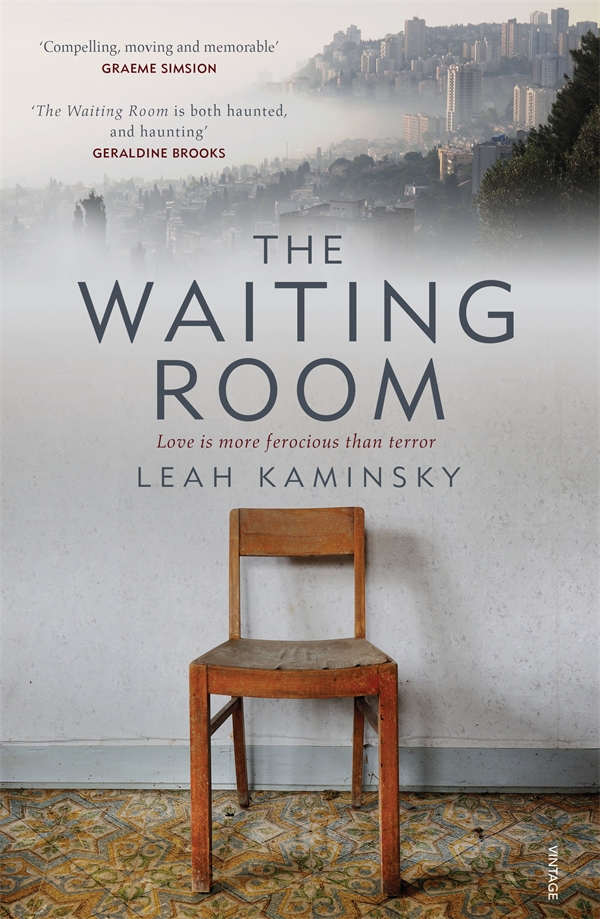
The Waiting Room - Leah Kaminsky
Without actually trying to, I've managed a succession of Holocaust novels in my latest lot of new books. There seems to be a new 'flavour' in them of late, and I don't know if that's due to where we are in history now, with fewer and fewer Holocaust Survivors still alive, or some other factor.
The Waiting Room, by Leah Kaminsky, is definitely a bird of a different feather. It tells the story of a child of Holocaust Survivors. Australia took the largest number of Survivors per capita than any country other than Israel, after the war. Both Sydney and Melbourne had very large numbers within the Jewish communities, with others scattered throughout the smaller communities in other capital cities and smaller towns.
Life for the children of Survivors was often fraught, many of them growing up without really knowing what had happened to their parents. They were haunted, nevertheless, by the nightmares and horrific memories that affected everyday behavior of the Survivors for the rest of their lives. In my experience with Survivors, there were those who told their stories, and those who didn't. Many who did were prompted by one of two motives - either to honour those of their families they had lost, and/or to teach others what happened in an effort to ensure it could never happen again. What they had with those Survivors who didn't tell their stories publicly, was that many of them had rarely shared their stories directly with their children. Occasionally, they'd tell their grandchildren, but not their children. When asked why not, they used to say that they didn't want their children knowing and being hurt by the stories - or that they didn't want to relive it within their families. Often, it was many years after the events before they started recounting their stories in public, and for those bearing testimony, it was frequently to school aged children in museums or schools, learning the history. That made a certain level of logical sense to me, then, thinking about them deciding to pass the stories on to their grandchildren.
Dina is an Australian doctor living and working in Haifa, married to Eitan, an Israeli. She met him while travelling, on an unplanned visit to Israel after a medical conference in Europe. They marry, and have a son, Shlomi. As the story begins, Shlomi is six and she is heavily pregnant with their second child. Eitan proves to be what previous boyfriends and lovers in the past have failed; able to live with the ghosts she carries with her from her parents' past.
She grew up in Melbourne, the only child of parents who both survived the camps in Europe. Her father was in Auschwitz, having lost his wife and daughter before being deported. None of his extended family survived. Her mother was in Bergen Belsen, and was the only survivor from her family. They met in a DP (Displaced Person's) Camp, and married when they got visas for Australia. Dina's father is a quiet man, a tailor, who never speaks of his previous family. However, her mother, who keeps photos of that first wife and child, cannot stop herself relating countless tales of the horrors she endured, and stories from other Survivor friends. From Dina's earliest days, there are periods when her mother is admitted to hospital, and to add to her mother's ghosts are mysterious things like 'shock treatment' and endless absences that are explained to her as her mother needing 'a little rest'.
Dina's father dies from a massive heart attack, and she is left caring for her increasingly fragile mother who, eventually, commits suicide by overdosing when Dina is eighteen. After qualifying as a doctor she attempts to escape the past by travelling and falling in and out of short term relationships. Eitan, a sabra (native born Israeli) who grew up on a traditional kibbutz, is a surprise to her. Exotic, calm, persistent, he holds her when she cries, and asks to be introduced to her ghosts, eventually convincing her to marry him. They choose Haifa over other Israeli cities to settle, on the basis that it is 'safer' than Jerusalem, Tel Aviv or Beersheva where there are all too frequent terrorist attacks.
However, the time is the second intifada, and attacks by suicide bombers are more frequent and widespread. Pregnant and vulnerable, Dina begins to obsess about Shlomi's safety, and the ghost of her mother, particularly, becomes more persistent, castigating her for flying off the handle and wanting to leave and go back to Australia where it's safer, telling her that her place is in Israel with her husband, because NOWHERE is safe for Jews. Eitan is struggling with the distance that is growing between them and continues to tell her that Shlomi will only become anxious if he sees her being anxious and overly protective of him. Having grown up in Israel, he is more pragmatic about the risks and understands the need to go on living as normally as possible. Dina is unable to find a similar pragmatism.
The book is, essentially, a story of one woman's struggle to reconcile the fears of the past and those of her present. She finds herself talking back to her mother's ghost while in the middle of other conversations with actual people as her mother's presence begins to dominate more and more as her own stress levels rise. In real time, the story is a tale of a single day when there is a terror warning for Haifa, and Dina ricochets between her surgery, Shlomi's school, the local shuk, and back to the surgery. It is her very panic and inability to stay in one place that ultimately saves her from dying in the attack, as she doesn't make it back to the surgery in time to be inside the building when the bomb is detonated. Instead, she is out by her car, knocked down by the blast and witnessing everything.
At a time when, once again, Israelis going about their everyday lives are being threatened by lone wolf attacks from Palestinian terrorists, this book is chilling. My friends in Israel are living the fears, stresses and anxiety that Dina goes through in that one day. They don't necessarily have the ghosts of Survivor parents haunting them. However, many must have ghosts of friends and family lost in both intifadas. When I was there in 2008, it was a calm period. But one of the Australian in my group studying at Yad Vashem took us one evening to a Jerusalem restaurant for dinner. A restaurant that had been rebuilt after it had been blown up during the second intifada, killing many innocent people, including friends of his. There is a memorial plaque at the entrance with a list of the names of the dead. He wanted to take us there; he always goes when in Jerusalem.
Although, at the end of the book, Dina goes back to Melbourne with her son and newly born daughter (named after her father's first child), she knows she will go back to Haifa. She knows that the way forward is to be tenacious and grab onto life in Israel with Eitan. My friend goes back to that restaurant to eat for the same reason, and in honour of his friends.
Saturday, 21 November 2015
The Book of Aaron - Jim Shepard
I've read some tough Holocaust books - both fact and fiction - but I have to say, Jim Shepard's The Book of Aaron is right up there with the toughest.
Set in the Warsaw Ghetto, the book begins as the walls to shut the Jews in from the rest of the city are being built. Nine year old Aaron's family lives within the area that is being enclosed, having previously moved from the country when his father was offered work in a Warsaw factory. The family is often at odds with each other, relationships are brittle and frequently acrimonious. Aaron is nicknamed Sh'maya (a play on the Hebrew 'sh'ma' - 'hear') by an uncle who says he 'did so many things that made him put his finger to his nose as a warning and say, 'God has heard.''. He doesn't like school and comes home with unsatisfactory on all his reports. His parents are constantly frustrated with him, but are mostly unable to convince him of the benefits of knuckling down. He seems to deliberately continue to provoke them by getting into more trouble - almost as if any attention is going to be good attention, even being in trouble.
As more and more people are moved into the Ghetto and daily live gets more and more difficult, Aaron teams up with a gang of other children smuggling food via tunnels in the walls. It is dangerous, and often they fluke escaping the authorities - German, Polish and Jewish. His gang is as dysfunctional as his family, constantly sniping at one another and inflicting punishments on each other. Aaron is often the butt of their fears and frustration of their collective circumstances, as he is frequently unsure of himself and cries enough to aggravate them.
Uncertainty is the norm for everyone in the Ghetto as, first, men and older boys are rounded up and taken off to 'work details', and then deportations to the death camps begin. Disease starts to take its toll. First Aaron's younger brother dies. Then his father and older brothers disappear in a 'work' roundup. Through a contact within the Ghetto's Jewish police, he manages, in exchange for intelligence of underground activities, to get occasional word of them. Eventually that dries up, but he is now caught up in having to make reports to his police contact. Then his mother dies of typhus and he is left alone.
When he and a fellow gang member, Lutek, are caught, Lutek is shot, but he is let off - no doubt to take word of potential consequences back to his gang, and others like them. The rest of the gang no longer trust him and he is left with no one to turn to. Having had a number of chance encounters with Janusz Korczak, director of an orphanage for Jewish children, he seeks refuge there, and begins a strange relationship with Kosczak - part colleague, part protege, part protector.
Janusz Korczak was a world renowned pediatrician, writer and educator. When the Ghetto walls were erected, he received countless offers to be rescued, hidden, looked after. He refused them all, because he wouldn't leave the children. One of the legendary figures of the Holocaust, he was transported, along with all the children and orphanage staff, to the death camp, Treblinka, where they were gassed on arrival.
The narrative of the novel creates a picture of those last weeks in the Ghetto within the orphanage before they were ordered to the trains to be deported. Most of what I've read of Korczak paints a noble portrait of a sensitive, self-sacrificing, intelligent man, who devotes his life to children and their welfare. Shepard offers up a portrayal that shows us a man down to his last resources, worn out begging for food and money for the children, ill with malnutrition and a heart condition, despondent and depressed. He smokes too much, drinks too much, doesn't sleep enough, and smells bad. He is often frustrated and angry, but never with the children. Aaron shadows him trying, along with orphanage staff, to discourage him from going out as it gets more and more dangerous. Aaron, in turn, is terrified of going out, fearing retribution from those gang members still alive, and of being picked up again by the authorities.
Ultimately, the order comes for the orphanage to be deported. In the chaos of the Umschlagplatz - the square where the Jews were gathered before being put on the trains - their arrival in neat, orderly lines, four abreast, with Korczak leading them, is one of the most poignant scenes reported. The novel ends as Koczak is lifting the smallest children into the cattle trucks, and we know there were no survivors.
I had to not read this book at night, in the end. It gave me nightmares. I've had Holocaust nightmares for years, particularly since studying in Jerusalem at Yad Vashem, doing an educator's course there for my then job at the Sydney Jewish Museum. I've heard many Survivor testimonies, I've read so many books, and watched countless documentaries. During the course - nineteen days straight, with only Saturdays off - we all lost it at some point. On the whole though, I developed ways of keeping it at a bit of a distance. A great deal of Holocaust fiction is 'sanitised', to a point. There's a sense sometimes, of a certain degree of nobility in the suffering - which of course, there really wasn't.
Shepard's book doesn't have any of that. It's gritty and raw. The dirt, disease, monotony and suffering are not hidden or minimised. Aaron's family argue. The relationship between his parents is fragile and deeply flawed. He appears to mostly be afraid of his father. He has a close bond with his mother, but that is cracked often with her despair over many of his actions.
There is nothing elegant about Shepard's text - it is terse, and pointed. The sentences are mostly short and abrupt. Descriptions are very basic. Dirt is dirt, the misery is miserable. I have a highly tuned visual sense, and reading this book created dark imagery in my head as I read. I found it very difficult to shake off, so after the first night of bad dreams, kept different books by the bed for night time reading. My sense is that this is an important book. At a time when many of the last Survivors are dying of old age, the history is becoming more distant. There is nothing quite like hearing first hand testimony from a Survivor. For me, the style of this book came close, even though it is a work of fiction.
I think that, perhaps, this is an important book. There is nothing of the 'story' about it really. It feels real. It's not an easy read, but it's one I think I'm glad I persevered with - for all the attendant difficulties.
Saturday, 31 October 2015
Second Half First - Drusilla Modjeska
Has memoir pushed all the way through its formal constraints to rival fiction? Write autobiography, Virginia Woolf asked, and call it fiction? No, for her that was not the way; but the lines were clearer then, the rules, and maybe also the ethics... pg 191
... Write memoir and call it fiction? Or write fiction and call it memoir? pg 195
Second Half First is a memoir; a memoir that Drusilla Modjeska begins on the eve of her 40th birthday - a pivotal age for women, especially, in Western society. A pivotal evening, as it turned out for Modjeska, bringing with it the end of a relationship. That this memoir starts partway through Modjeska's life, and not at the beginning, is typical of this writer, who began her writing career with a PhD thesis turned book, then two books - Poppy and The Orchard - that straddle the boundaries of fiction and biography/autobiography. Her fourth major book, Stravinsky's Lunch, is a dual biography of two important Australian artists, Grace Cossington Smith and Stella Bowen - written, in part, to illustrate the realities of different challenges women artists have faced throughout history, and still, in some part, face. It is a scholarly work, but isn't framed as such, and received mixed reviews at the time of publication - partly, I think, because people couldn't quite classify it. It's not a text book, not a straight biography - again, straddling different genres, different worlds, different expectations... Then there is The Mountain, Modjeska's first novel which, again, for me at least, still had something of the tang of Modeska's 'faction' style about it; drawing, as it did, of her own time living in New Guinea.
I've sat on writing this post for a while since reading the book - partly because I'm not honestly sure how reading it would be for someone who hasn't already read Modjeska's other books. All of her books carry so much of the personal that reading this memoir felt, at times, as if I was hearing the same stories again, but from a different viewpoint. I was reminded of a radio interview I heard many years ago on the ABC with Australian novelist Elizabeth Jolley, who was asked if all writers wrote fiction. Her answer was that, essentially, yes they do; in that a single person's view is someone telling a story - another person's interpretation of the same story will be different, because it's all subjective.
I did find Second Half First enormously satisfying though - it felt very much as if Modjeska was filling in all sorts of gaps. Obviously, in Poppy, particularly, names were changed, and events altered, in an effort to fictionalise her mother's life and those lives around her... In this memoir, there are no name changes, and reactions of family and friends to those books have been included, as have Modjeska's own personal circumstances around the times of writing Poppy and the other books. Her writing style has an immediacy about it that I've always loved - in the other books, it provides a clarity that makes the narratives all the more believable and compelling. In the case of Second Half First, I found myself feeling immensely privileged to be 'let in' to Modjeska's life at such a personal level as I read.
At art school, when I reached the business subjects towards the end of my course, we had a couple of projects where we had to write about an artist or writer who had influenced our work. I cast around all the obvious people - as a potter, I was looking at other potters like Milton Moon and Jeff Mincham, and with my drawing, I was looking at people like Frida Kahlo, Dora Carrington and other 'autobiographical' painters who were also known for their use of colour. Ultimately though, I came back to Modjeska. For me, she has been something of a muse, and has been quietly in the background as a creative influence that crosses the boundaries of my work with clay and drawing/painting.
The first book I had of Modjeska's was Poppy - given to me by my mother. In my journal, from the time when I was reading it, there are pages and pages of me writing about reading it, and questioning why it was my mother had given me this particular book. I took a lot of that questioning and evaluating directly into my work at the time, taking small scale drawings from within the journal into larger formats, and getting braver about letting them be seen. The clay started to be a 'voice' for me too, giving me a material that allowed me to explore more personal ideas in a more oblique way. The more I looked at the notion of influence from a particular individual, the more I felt directed back to Modjeska.
In recent years, where my creative output has largely been written, the influence is, I think, much more obvious. Modjeska's techniques that draw from different genres and successfully mix them into something that is altogether her own, paved the way for me to feel more confident about learning how to break the rules. Some of my more successful written pieces have been the times when I've managed to blur the boundaries between straight facts and my interpretation of those facts. I've yet to venture into fiction - so many years of academic and other non-fiction writing has me more than a bit scared of trying to create fictional characters and narrative. However, reading Modjeska's memoir stirred that pot again and it's been bubbling away quite happily on its back burner!
The tantalising thing about Second Half First is, of course, whether Modjeska will go on to write 'First Half Second' or not! I'm sure I'm not the only Modjeska fan who will be hoping, very much, that she does. However, even if she doesn't, this book opens up the world of a woman writer in a very particular time in women's history, and that, in itself makes it an important book - I think. I also think it is a must read for any writer - but that might well be just my enthusiasm for this particular writer speaking! For people familiar with the Australian writing scene, there is a feast of names to enjoy, and Modjeska's circle of friends includes some of the more well known of local contemporary writers. There is also - and this happens to me EVERY time I read Modjeska (even when re-reading) - the spur to read other people. Modjeska draws on history, biography, fiction, poetry - all other writing forms - and the writers populate all her books, as do the artists. I have a new list of writers to track down and read as a result of reading this memoir, and new artworks to find and look at.
So, I would encourage people to get their hands on a copy - and if it's their first encounter with Modjeska's work, I'd love to know who might then go on to read the other books!
Tuesday, 13 October 2015
Happiness is...
I saw this meme on Facebook just now, and decided it was a SIGN...a sign to get back to this poor neglected blog. I've been doing a lot over at The Original Dragon Mother over the last little while, and quite a bit of freelance work, so with one thing and another, I've not been here.
I spotted the meme when I went back for another FB wander just after I'd got off the phone to Oscar and Friends (remember them? My favourite little bookshop in Double Bay?) It seems that Drusilla Modjeska has written a memoir - or part of one, anyway... I got an email from Random House - I can't remember how I landed on their mailing list, but there you go. Just as I was about to delete the email, I saw Modjeska's name...so I opened it instead. I had NO idea she'd embarked on a memoir, so I got on the phone to the good folk at Oscars, and yes, it IS out; no, they don't have a copy; but, yes, they have it on order and they can put me down for one. Big smiles at this end, and no little amusement at the other, since my excitement was just a tad obvious.
I've just trawled back through my posts and discovered, much to my surprise, that I've only touched a little bit on how important Modjeska's work is to me, personally and as a writer. I don't know how that comes about - I'd best get back on track reading and blogging and rectify that. I did find a mention of one book, Poppy, in this post. It's the book that started me with Modjeska, and I own all of her books - well, once I get hold of this memoir, I will! Now, I just have to wait for that all important phone call...
Wednesday, 3 June 2015
School Libraries
I LOVED the libraries at my schools. They were my sanctuaries. As an awkward, socially inept child, and later an odd teenager with quite different interests to most of the kids around me, they were places I could go during recess and lunch breaks that were largely unpopulated, quiet, and safe. I got to know the librarians - to the extent that, in high school, the librarian kept new books for me before they'd even been processed, knowing I'd already worked my way through the fiction section by midway through year ten.
It was a golden age of school libraries too - lots of classics, lots of what have become classics in the new literature, and as I recall, a dearth of vampires! To this day, there is a significant chunk of my collection of children's literature that has come from decommissioned library books - treasures I've acquired for, at most, a few dollars apiece.
Even when I got to university, the library was a wondrous place. Again, at times, as I navigated my way around a new, much bigger learning institution, it was a sanctuary - even if some of the tomes on the shelves were a little scarier than the ones in the school libraries.
I found this marvelous selection of images of innovative new school libraries on my Facebook feed and it got me thinking back. I love some of the ideas used in the libraries in the photographs, and I'm particularly tickled by the ones of the two schools in the Bronx in New York - a whole program to redecorate and make enticing the libraries in districts where children are significantly disadvantaged. Hopefully, many of those kids will find sanctuary in them as I did, and who knows, maybe some of them will grow up to have rooms in their houses that are home to so many books that they can, quite legitimately, be called libraries too!
http://www.theguardian.com/teacher-network/gallery/2015/jan/08/school-libraries-world-books-gallery
Sunday, 19 April 2015
Wordplay
Bad blogger...I've been reading solidly these last few months, but not writing much beyond the necessary contract work that puts the odd penny into my hungry bank account! However, this appeared on my Facebook feed this morning and reminded me of just how much I enjoy the actual words when I'm reading.
http://www.buzzfeed.com/danieldalton/bob-ombinate?utm_term=.brwYNROj4#.txLEv2GMR7
Favourite from that page - this one:
I didn't know there was a word for that at all - and it pleased me no end find this as I scrolled!
Underneath the post were two more related pages, one with another perfect bookish word I'll leave you to find and enjoy, and the last that I included just because it's so much fun. Imagine trying to use some of those now obsolete words now - although, as I write, it's truly lumming down here in Sydney - so perhaps there are occasions to revisit them!
http://www.buzzfeed.com/danieldalton/ever-embasan#.yomzrGxEMB
http://www.buzzfeed.com/lukelewis/27-delightful-obsolete-words-its-high-time-we-revived#.lvogwV6NpG
http://www.buzzfeed.com/danieldalton/bob-ombinate?utm_term=.brwYNROj4#.txLEv2GMR7
Favourite from that page - this one:
I didn't know there was a word for that at all - and it pleased me no end find this as I scrolled!
Underneath the post were two more related pages, one with another perfect bookish word I'll leave you to find and enjoy, and the last that I included just because it's so much fun. Imagine trying to use some of those now obsolete words now - although, as I write, it's truly lumming down here in Sydney - so perhaps there are occasions to revisit them!
http://www.buzzfeed.com/danieldalton/ever-embasan#.yomzrGxEMB
http://www.buzzfeed.com/lukelewis/27-delightful-obsolete-words-its-high-time-we-revived#.lvogwV6NpG
Friday, 27 February 2015
Movies from books: Still Alice and others...
DB and I had brunch at a cafe in Alexandria this morning with the papers. This is a not unusual weekend activity for us - I MUST have coffee before it's too late in the morning, but to stop myself OD-ing on coffee, I don't keep it at home - ergo, we must go out to cafes...definitely a first world issue! Anyway, something of interest for me in today's Sydney Morning Herald is the list of top ten bestseller books:
I did get to the movie of Still Alice last week. It was one of the better adaptations I've seen in a while. The storyline was simplified, and locations changed, but the essence of the book was very much there, which pleased me. Also, Julianne Moore was, I thought, absolutely amazing in the role of Alice, and very much deserved the Oscar and all the other awards she's won.
Insasmuch as the secondary market of books that follows on from a film, particularly a successful film, is a good thing, I can't be sorry to see this aspect of the bestseller list. I DO, however, have real difficulty looking at Fifty Shades of Grey in the company of The Narrow Road to the Deep North - winner of this year's Man Booker Prize. I know a bestseller list is about the sales statistics, and not the quality of the books on the list (I also have issues with Pete Evans' book, because I feel strongly that the whole Paleo philosphy is deeply flawed) but...you know... I have yet to read The Narrow Road to the Deep North, although, The Teacher recently touched base with me via Facebook, asking if I'd read it, saying it's marvelous. So, it's on my list. Whether or not a movie is made from an adaptation of the book will be anyone's guess, but I guess that being a Booker prizewinner guarantees it a place within the canon of modern classics, so it should have a reasonable shot at long term sales that a badly written fly-by-night popular success like Fifty Shades of Grey just won't achieve.
I had huge reservations about Fifty Shades of Grey when the trilogy was published, and they are just being reinforced by everything I've heard about the movie, and of course, parts two and three are yet to come. In a weirdly creepy juxtaposition of popular culture, the movie was released on the Valentine's Day weekend, I guess, as a prospective date movie - a thought that REALLY worries me. As was to be expected, there have been protests all over the Western world in the wake of the movie, and much spirited debate. I've seen reviews that slam the movie, as book reviews slammed the books, for tacitly promoting domestic violence, at a time when, in Australia, even our national average of deaths in domestic violence situations is currently DOUBLE what it was at the same time last year. Then, I've read reviews from people who did and didn't read the books, dismissing all of that and saying that it's all a 'fantasy' and people 'know' it's not serious, etc... Is that how we've reached the stage we have where there is such a struggle to deal with the issue of domestic violence? That the stories we read and see are just 'stories' and not 'real' so that those stuck in real situations have that much more difficulty being taken seriously.
This year, commentary after the Oscars said that they'd been a really 'political' event, with winners in man categories using their moment at the microphone to promote the issues showcased in their movies. Julianne Moore spoke out about Alzheimers in her winner's speech. Eddie Redmayne, winner of the best male actor in a lead role for his portrayal of Stephen Hawking, The Theory of Everything, highlighted the issues for those suffering from ALS. (You can read a post I wrote on my other blog about seeing that movie - also based on a book HERE) Of course, we applaud these actors and movies for bringing issues like this to public attention via such an accessible medium - movies can have a far bigger audience than books, as we well know. However, to dismiss the potential impact when it comes to something like domestic violence is folly, pure and simple - and all I can say at this stage is thank goodness there was no way that Fifty Shades of Grey was going to be anywhere near the Oscars, and offer an opportunity for that kind of accolade by default, of domestic violence.
- Ruby Circle, Richelle Mead
- American Sniper, Chris Kyle, Scott McEwen and Jim Defelice*
- Fifty Shades of Grey, E.L. James*
- Obsession in Death, J.D.Rob
- Wild, Cheryl Strayed*
- Family Food, Pete Evans
- Still Alice, Lisa Genova*
- The Girl on the Train, Paula Hawkins
- Gone Girl, Gillian Flynn*
- The Narrow Road to the Deep North, Richard Flannigan
![]() |
| Julianne Moore as Alice in Still Alice |
Insasmuch as the secondary market of books that follows on from a film, particularly a successful film, is a good thing, I can't be sorry to see this aspect of the bestseller list. I DO, however, have real difficulty looking at Fifty Shades of Grey in the company of The Narrow Road to the Deep North - winner of this year's Man Booker Prize. I know a bestseller list is about the sales statistics, and not the quality of the books on the list (I also have issues with Pete Evans' book, because I feel strongly that the whole Paleo philosphy is deeply flawed) but...you know... I have yet to read The Narrow Road to the Deep North, although, The Teacher recently touched base with me via Facebook, asking if I'd read it, saying it's marvelous. So, it's on my list. Whether or not a movie is made from an adaptation of the book will be anyone's guess, but I guess that being a Booker prizewinner guarantees it a place within the canon of modern classics, so it should have a reasonable shot at long term sales that a badly written fly-by-night popular success like Fifty Shades of Grey just won't achieve.
I had huge reservations about Fifty Shades of Grey when the trilogy was published, and they are just being reinforced by everything I've heard about the movie, and of course, parts two and three are yet to come. In a weirdly creepy juxtaposition of popular culture, the movie was released on the Valentine's Day weekend, I guess, as a prospective date movie - a thought that REALLY worries me. As was to be expected, there have been protests all over the Western world in the wake of the movie, and much spirited debate. I've seen reviews that slam the movie, as book reviews slammed the books, for tacitly promoting domestic violence, at a time when, in Australia, even our national average of deaths in domestic violence situations is currently DOUBLE what it was at the same time last year. Then, I've read reviews from people who did and didn't read the books, dismissing all of that and saying that it's all a 'fantasy' and people 'know' it's not serious, etc... Is that how we've reached the stage we have where there is such a struggle to deal with the issue of domestic violence? That the stories we read and see are just 'stories' and not 'real' so that those stuck in real situations have that much more difficulty being taken seriously.
This year, commentary after the Oscars said that they'd been a really 'political' event, with winners in man categories using their moment at the microphone to promote the issues showcased in their movies. Julianne Moore spoke out about Alzheimers in her winner's speech. Eddie Redmayne, winner of the best male actor in a lead role for his portrayal of Stephen Hawking, The Theory of Everything, highlighted the issues for those suffering from ALS. (You can read a post I wrote on my other blog about seeing that movie - also based on a book HERE) Of course, we applaud these actors and movies for bringing issues like this to public attention via such an accessible medium - movies can have a far bigger audience than books, as we well know. However, to dismiss the potential impact when it comes to something like domestic violence is folly, pure and simple - and all I can say at this stage is thank goodness there was no way that Fifty Shades of Grey was going to be anywhere near the Oscars, and offer an opportunity for that kind of accolade by default, of domestic violence.
Subscribe to:
Posts (Atom)